


Precision Trolling Data
3.6259.00 Reviews
App Specs
- Version
- 7.1
- Updated On
- License
- Free
- Downloads
- 100,000+
- Developer
- Precision Trolling Data App
- Categories
- Sports
- Platform
- Android
Screenshots
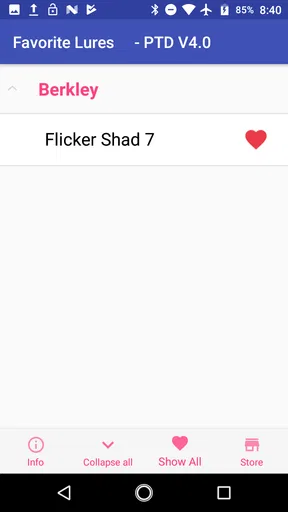
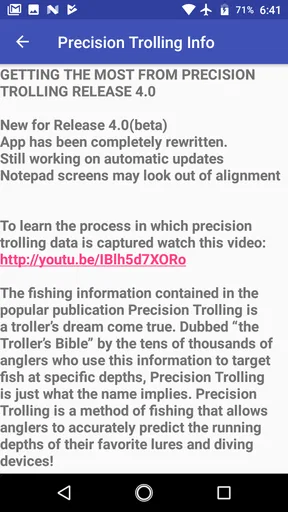
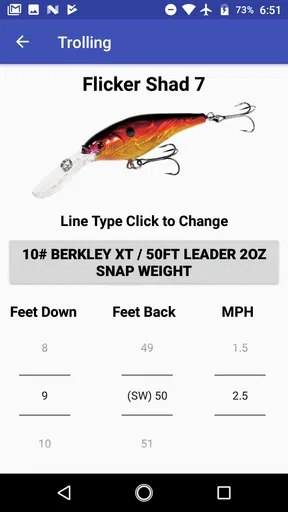
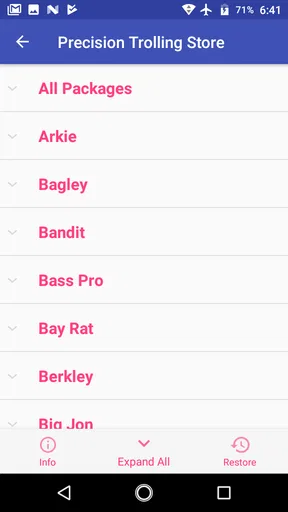
 Analysis by AppCompare
When a lure keeps running higher or lower than I expected, I don’t want to guess my way through a whole morning on the water. That is the practical problem Precision Trolling Data is meant to help with: matching a trolling setup to a target depth, then using that information as a starting point while conditions change. I see it as a focused reference for anglers who troll, rather than an all-purpose fishing companion. It can make preparation more deliberate, but it cannot turn a chart into a promise that a lure will behave identically on every boat and every day.
Where anglers can get stuck
The main adjustment is learning to treat depth information as guidance, not a guarantee. A lure’s actual path depends on the setup and the way it is being used, so a number on a screen is most useful when I can reproduce the relevant conditions on the water. If I change several things at once, such as speed and line length, it becomes hard to tell which change affected the result. I get more value by altering one variable at a time and noting what I changed.
That approach also helps when a result seems surprising. Before assuming the app is wrong, I would check that I selected the intended lure and entered the setup details consistently. If the lure is not listed in the way I expect, or I am fishing with a different kind of equipment, I would avoid treating a nearby entry as an exact match. A reference tool is strongest when its inputs resemble the setup I actually have.
Setup checks before leaving shore
I would spend a few minutes getting familiar with the app before the boat is moving. Look up the lure you plan to use, review the information you will need, and decide which depth or presentation you want to test first. On the water, wind, movement and divided attention make any phone task less convenient, so doing the searching in advance keeps the app in a supporting role instead of becoming a distraction.
It is also sensible to check that the app opens and that the information you plan to use is available before relying on it away from a connection. The app is described as usable offline, which is valuable on a lake or stretch of water with weak service, but a quick pre-trip check is still a good habit. Keep your phone protected and accessible, and do not let screen use compete with safe boat handling or watching the water.
A workflow that makes the information useful
For a first pass, I would choose one lure, settle on a consistent speed, and use the app’s depth guidance to establish a starting presentation. If I am not getting the result I want, I would adjust a single part of the setup, then give that change a fair test. This makes the app useful as a way to structure experimentation, not just as a lookup screen. It also gives me a clearer answer later about what worked.
The catch log can add value over time if I record useful context rather than only the fact that I caught a fish. A note about the lure, depth and conditions I was using makes a later comparison more meaningful. I would not expect a log to explain every change in fish behavior, but it can help me notice patterns in my own trips and avoid relying on a hazy memory of last season.
Worth Reading Before You Choose

Flipboard Shows What News Apps Must Do Beyond the Feed

Switching to Android Auto Means Rethinking Your Driving Routine

Google Calendar Makes a Crowded Week Easier to Manage

Ludo King Makes the Most of the Minutes Between Plans

Baby Panda World Brings Quick Play to Modern Phones, but Its Game Library Feels Busy

ESPN’s Live Game View Makes Following Close Games Easier
When another factor is the real problem
If an app entry and the observed depth do not line up, the phone may not be the cause. Differences in speed, line, boat movement, or the way a setup is deployed can all change what happens in the water. I would first repeat the test as consistently as I can and check my inputs before deciding that the reference is unhelpful. The same caution applies to catch results: a fish-free stretch does not prove that a depth estimate failed, because fish activity and location are separate parts of the problem.
This is where the app’s limits matter. It can help me make a more informed trolling choice, but I still have to read the conditions, handle the equipment and decide when to change tactics. If I mostly fish from shore, prefer casting, or want broad local reports and general trip-planning tools, a dedicated trolling reference is probably not the first app I would choose. A local fishing resource or a broader fishing app may fit those needs better.
Getting Started with Precision Trolling Data
Downloading Precision Trolling Data is as easy as reeling in a bluegill. It's available on both Android and iOS platforms, making it super accessible. Once installed, you’re greeted with a user-friendly interface that doesn’t require a PhD in marine biology to understand. Trust me, even if you’re a tech novice, you’ll be navigating this app like a pro in no time.
Features that Hook You In
So, what’s in the tackle box of Precision Trolling Data? First off, the app is packed with a vast database of trolling data. It has detailed information on over 1000 trolling lures, from crankbaits to spoons. Each entry in the database provides you with crucial data on how deep your lure will run at specific speeds and line lengths. It's like having a seasoned angler whispering tips in your ear, minus the fishy breath.
Another fantastic feature is the ability to log your catches. You can keep track of where and when you caught your last big one, along with the lure and depth used. This is perfect for those of us who can’t remember what we had for breakfast, let alone the details of a fishing trip from last month.
Why It’s a Game Changer
The real magic of the app lies in its precision. The data provided allows you to troll with confidence, knowing exactly how deep your lure is swimming. This precision can make all the difference between a day of empty lines and a boatload of fish stories. Whether you’re a professional angler or just starting out, having this level of detail at your fingertips is invaluable.
One of the things I personally love is the offline capability. No need to worry about losing signal out on the water. All the data is readily available, so you can continue to fish smart even when Mother Nature decides to turn off the Wi-Fi.
Ease of Use and Accessibility
The developers have done a stellar job with the app’s design, ensuring that it’s intuitive for all users. Navigation is straightforward, and information is easy to find. The app’s clean, uncluttered layout means you can focus on what you love most – fishing – without getting bogged down by unnecessary features or complicated menus.
For those who like to geek out on data, the app allows you to explore different scenarios, adjusting variables like line type and trolling speed. It’s like a mini fishing simulator in your pocket, which keeps things interesting when you’re not on the water.
Comparing it with broader fishing apps
For a trolling-focused angler, the difference from a general fishing app is the depth of attention given to lure presentation. Broad alternatives are often more useful for checking local information, planning a trip, or keeping a general record; this app is more compelling when the question is, “How can I make this trolling setup reach the depth I want?” I would not replace a map or a local source with it, and I would not expect those broader tools to offer the same focused reference. They solve different problems, so carrying both kinds of tool can make sense.
That focus is also a trade-off. The app is less appealing if trolling is only an occasional part of your fishing, or if you mainly want social reports and location guidance. Before committing to a paid item, I would check whether the lure information I need is relevant to my tackle and style. The app itself is free to install, while in-app purchases range from under a dollar to just under one hundred and ten dollars per item, so it is worth looking carefully at what an optional purchase covers rather than assuming every useful entry is included at no cost.
A realistic day on the water
Imagine heading out with a few familiar lures and only a short window to fish. Before leaving, I would identify the lure I want to start with and use the reference to choose a sensible setup. Once moving, I would keep that setup steady long enough to judge it, then make one adjustment if the presentation seems off. If a catch follows, I would record the lure and depth while the details are fresh. That sequence turns a quick lookup into a repeatable routine, without pretending that the app can choose the right fishing spot or guarantee a bite.
For a newer troller, the practical benefit is a more organized way to learn how speed, line and lure choice affect depth. For an experienced angler, it can serve as a quick reference and a way to compare a familiar approach with another setup. Either way, I would use it to form a testable plan, then trust observations on the water over an entry that does not match the conditions I am seeing.
Cost, fit and everyday usability
Precision Trolling Data is a free sports app from Precision Trolling Data App, with a 3.6 average from around 460 ratings and more than 50,000 installs. It is rated for Everyone, and its current version is 7.1, with Android 5.0 or later required. Those details make it accessible to many Android users, but I would still check compatibility on my own device before a trip, especially if I rely on a particular phone. Its history goes back to May 29, 2014, so this is an established, specialized tool rather than a new general-purpose fishing idea.
One useful question is whether the free installation is enough for my routine. Since optional purchases vary substantially in cost, I would begin by exploring the app’s available information and only spend money if a specific need justifies it. Another is whether I can use it comfortably while fishing: my preference is to do most lookup work before setting off and keep any on-water check brief. A third is whether it will help me catch fish immediately. I would not count on that; its value is in making setup decisions more informed and records easier to revisit, not in replacing judgment or favorable conditions.
Final Thoughts
In a world where apps often promise more than they deliver, Precision Trolling Data stands out as a genuine tool for anglers. It’s reliable, informative, and most importantly, it helps you catch more fish. Whether you’re aiming to improve your trolling technique or simply want to keep better track of your catches, this app is worth every penny.
So, if you’re looking to up your fishing game, give Precision Trolling Data a try. It’s like having a seasoned fishing guide right in your pocket, ready to help you make the most of every trip on the water. Tight lines, my friends!
My practical verdict
I would recommend it most to someone who trolls regularly, likes to understand why a lure reaches a particular depth, and is willing to test a setup methodically. I would steer a casual caster or an angler seeking maps and local reports toward a broader tool instead. My main advice is to prepare before launching, change one variable at a time, and treat the reference as a starting point rather than an exact promise. With that mindset, Precision Trolling Data can earn its place in a fishing routine; without it, the specialized detail may be more than you need.
Pros
- Extensive database of trolling techniques.
- User-friendly interface for easy navigation.
- Regular updates with new fishing spots.
- Works offline for remote locations.
- Detailed species-specific information.
Cons
- Requires a paid subscription for full access.
- Not available in all geographic locations.
- Limited features in the free version.
- Occasional app crashes reported by users.
- No real-time weather integration.
FAQs for Precision Trolling Data
What is Precision Trolling Data?
Precision Trolling Data is a comprehensive fishing app designed to provide anglers with detailed trolling data for various types of lures and fishing conditions. It offers precise depth and speed calculations, helping users optimize their fishing strategies and increase their chances of success on the water.
How does Precision Trolling Data work?
The app uses an extensive database of lures and their specific trolling depths to provide accurate depth readings. Users can input data such as line type, lure, and speed to receive precise information. This allows anglers to adjust their techniques based on real-time, reliable data to improve fishing outcomes.
Is Precision Trolling Data suitable for beginners?
Yes, Precision Trolling Data is designed to be user-friendly and accessible for anglers of all skill levels. Beginners can benefit from its straightforward interface and detailed instructions, which help simplify the complexities of trolling. The app provides valuable insights that can help even novice anglers enhance their fishing techniques.
What kind of data can I expect from the app?
The app provides data on lure depth, speed, and performance under various conditions. It includes an extensive list of lures and their associated trolling characteristics. Users can also access seasonal tips and recommendations tailored to specific fishing environments, making it a versatile tool for any angling adventure.
Does Precision Trolling Data require an internet connection?
No, Precision Trolling Data is designed to work offline, allowing users to access all its features without needing an internet connection. This offline capability ensures that anglers can utilize the app in remote locations where connectivity might be limited, making it a reliable companion for all fishing trips.


